Short answer
Private Label Lingerie Minimum Order Quantity should be evaluated as a sourcing decision, not just a content topic. The safest path is to define fit, fabric, MOQ, labeling, packaging, QC, and timeline before comparing factories.
What private label lingerie minimum order quantity means for buyers
Private Label Lingerie Minimum Order Quantity is not just a search term; it is a procurement decision. Buyers need to know which production route fits the order, what information the factory needs, where quality risk appears, and how the decision affects sampling, labels, packaging, and final landed cost.
Factory information to prepare before asking for a quote
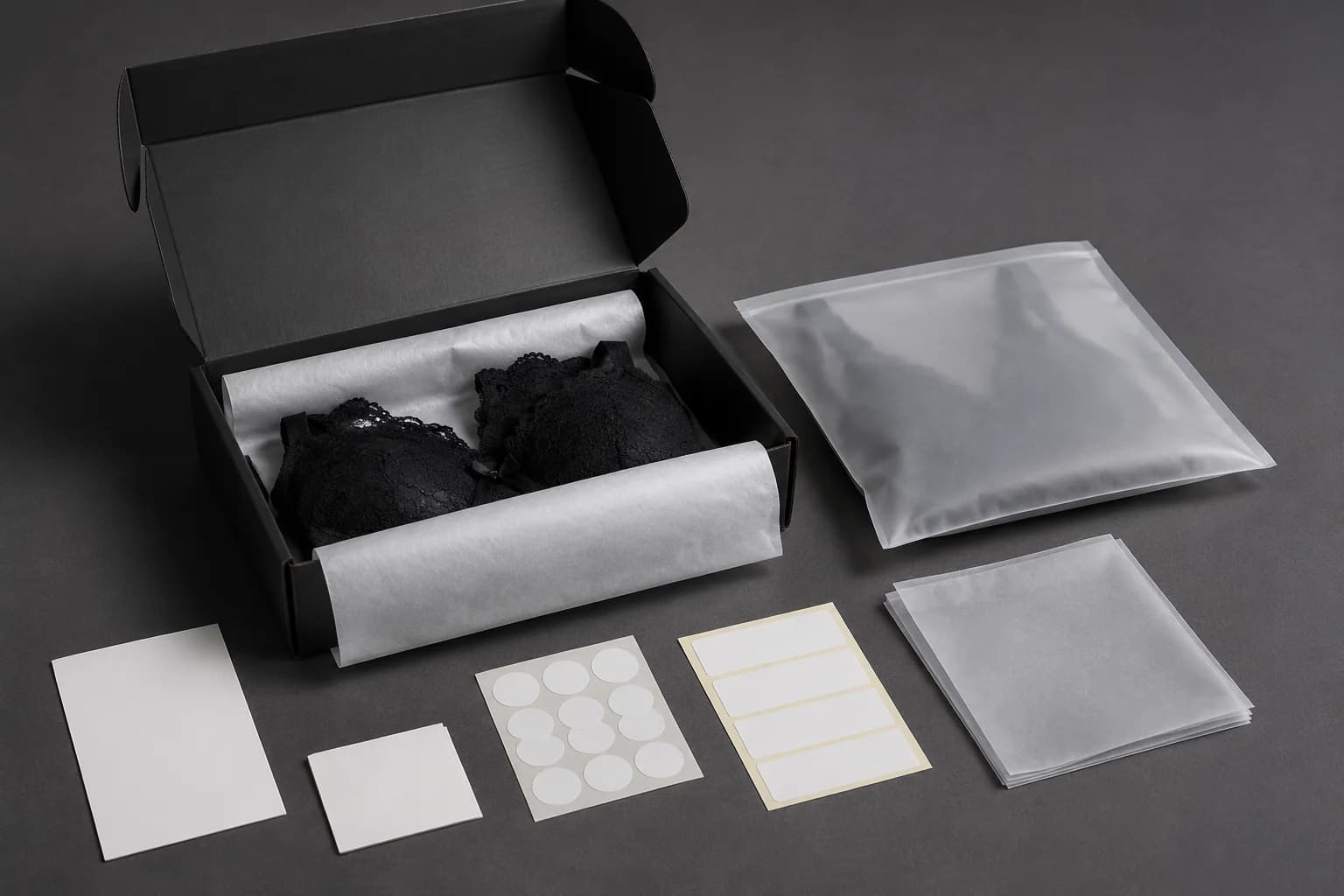
Prepare target style count, size range, order quantity, reference construction, fabric preference, colorways, label requirements, packaging format, destination market, and launch deadline. A complete brief helps the factory quote private label lingerie accurately and reduces sample revisions.
MOQ, sampling, and production timeline
For most OEM and private-label lingerie styles, MOQ depends on fabric dyeing, lace minimums, trims, labels, and packaging. Sampling usually starts with a construction sample, then a fit and pre-production sample before bulk cutting. Timeline risk increases when custom lace, dyed elastic, plated hardware, or special packaging is added late.
Quality checkpoints that matter
Inspect fabric hand-feel and stretch recovery, lace symmetry, cup shape, strap tension, hardware attachment, label placement, size grading, color consistency, seam strength, and final packing. For intimate apparel, small construction errors quickly become fit complaints, so inline checks are more useful than relying only on final inspection.
How this topic connects to your sourcing route
Informational startup/process intent only; /private-label-lingerie/ owns direct supplier intent. Use this guide for research and planning, then move to the commercial page when you are ready to compare samples, MOQ, materials, and production schedules.
Lingerie & Apparel Brands considerations
Lingerie & Apparel Brands buyers usually care about repeatability, replenishment timing, packaging readiness, and clear communication on substitutions. Tie every style decision back to your channel and return-risk profile.
Procurement checklist
Before you send the inquiry
Target quantity and replenishment plan
Tech pack, reference sample, or construction notes
Fabric, lace, elastic, and hardware preferences
Size range, grading rules, and fit tolerance
Private-label packaging and barcode needs
Destination market and compliance requirements
Related sourcing guides
P1 · private label and brand
How to Find A Private Label Lingerie Manufacturer
How to Find A Private Label Lingerie Manufacturer explained for B2B buyers: factory process, MOQ, quality checks, risk points, and when...
P1 · private label and brand
Private Label Lingerie Startup Checklist
Private Label Lingerie Startup Checklist explained for B2B buyers: factory process, MOQ, quality checks, risk points, and when to use p...
P1 · private label and brand
Private Label Lingerie Sample Process
Private Label Lingerie Sample Process explained for B2B buyers: factory process, MOQ, quality checks, risk points, and when to use priv...
P2 · private label and brand
Private Label Lingerie Cost Breakdown
Private Label Lingerie Cost Breakdown explained for B2B buyers: factory process, MOQ, quality checks, risk points, and when to use priv...