Intimates OEM Product Development Capability: Europe RFQ Criteria
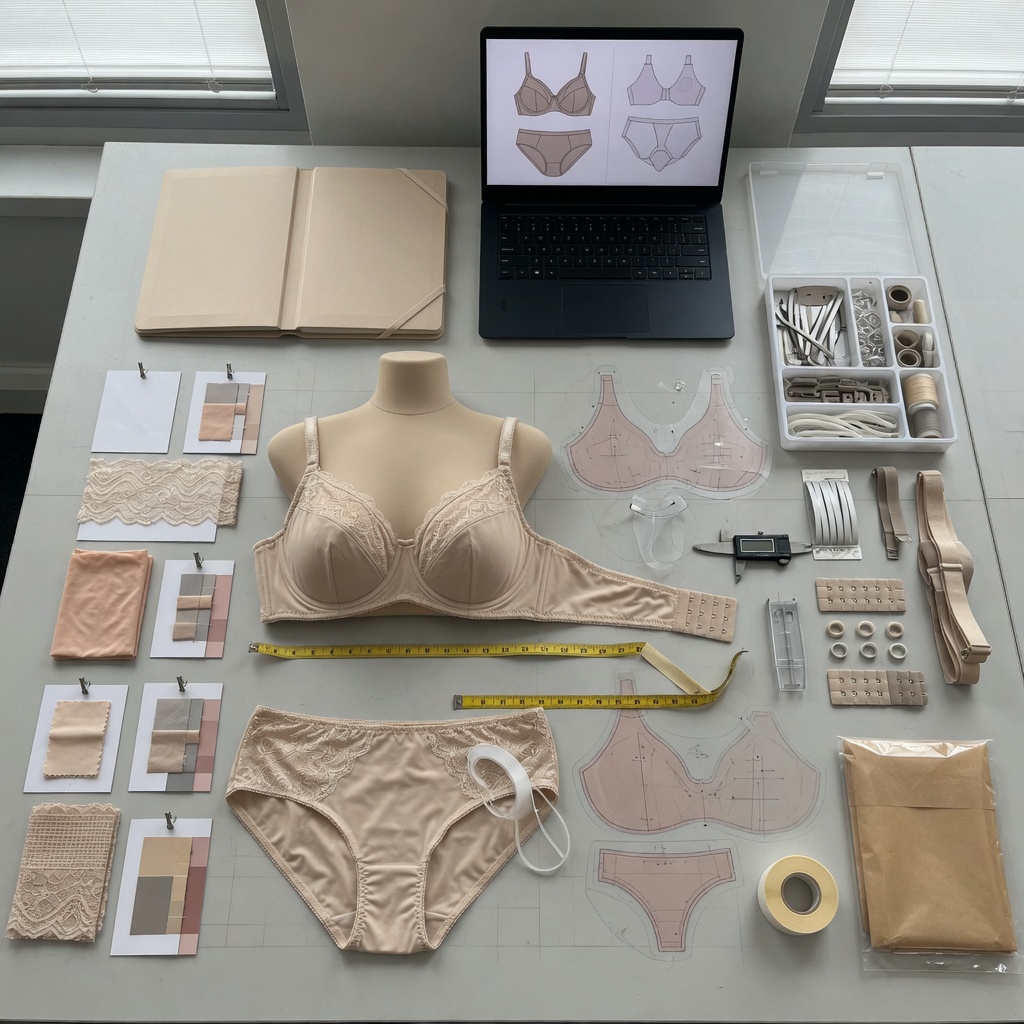
By Vincent Xi, Editorial Author
For Europe-focused B2B procurement, an intimates OEM product development capability claim should remain unverified until the candidate returns style-specific, revision-controlled evidence from brief acceptance through manufacturing release. The RFQ question is not whether a candidate advertises end-to-end services. It is whether the candidate can translate the buyer's intimates brief into controlled materials, fit decisions, samples, costs, timing, destination responsibilities, and a releasable manufacturing pack.
This page addresses that RFQ decision only. It is not a supplier endorsement or a generic Europe compliance guide.
- Advance to scoped development when assumptions, components, fit basis, sample plan, quote basis, approval roles, and destination ownership are documented.
- Hold for clarification when cost, timing, evidence scope, material availability, measurement conditions, or approval ownership depends on an unstated assumption.
- Block manufacturing release when the approved sample, bill of materials, technical pack, pattern and grading files, QC plan, label and packaging inputs, and change record do not identify the same authorised revision.
Practical Europe RFQ checklist for product development capability
Copy this checklist into each style RFQ and return schedule. Mark an item complete only when the candidate's return identifies the applicable style, controlled revision, document date, product or material scope, owner, approval owner, and status. Record not applicable only with a buyer-approved rationale.
Before issuing the RFQ
- [ ] Assign a style identifier and current RFQ revision; attach the marked brief, measurement diagram, intended size range, colourways, support or coverage intent, and mandatory versus flexible details.
- [ ] List intended European sales destinations separately: each intended EU country, each EEA destination outside the EU, the UK, and any buyer-required country or retailer overlay.
- [ ] Assign the buyer's legal or compliance reviewer for each destination route instead of requesting or accepting a generic Europe compliant statement.
- [ ] Define the fit basis, base-size expectation, measurement condition, tolerance approval owner, reference sample where applicable, and wearer-review protocol where required.
- [ ] Define material and component requirements, permitted alternatives, evidence expectations, source-status fields, and substitution approval authority.
- [ ] State each requested digital or physical sample deliverable by purpose, size, colour or material state, quantity, format, reviewer, and decision to be closed.
- [ ] State the required quote currency, quantity basis, delivery basis, inclusions, exclusions, validity, calendar assumptions, and change-cost rules.
When reviewing the candidate's return
- [ ] Confirm that every brief assumption, alternative, dependency, and open decision has an owner and due point.
- [ ] Confirm that the preliminary bill of materials identifies each critical fabric, elastic, cup, wire, channel, strap, closure, label, and packaging input where applicable.
- [ ] Confirm that fit, pattern, grading, measurement, material-evaluation, sample, quote, and calendar documents refer to the same style and revision.
- [ ] Confirm that sample stages identify their decision purpose and do not imply that a digital output closes a decision requiring a physical reference.
- [ ] Separate candidate-created, vendor-supplied, externally commissioned, buyer-owned, and unavailable evidence; record missing evidence as an open gap.
- [ ] Check that EU, non-EU EEA, UK, and country- or retailer-specific responsibility rows remain separate and have designated reviewers.
- [ ] Reconcile quoted cost and timing with the returned construction, bill of materials, sample plan, destination inputs, and stated dependencies.
Before authorising manufacturing
- [ ] Confirm that the approved reference sample, final bill of materials, technical pack, patterns, grading files, QC plan, labels, packaging inputs, concessions, and change record identify one authorised revision.
- [ ] Close or formally hold every unresolved material, fit, destination, evidence, cost, timing, and approval gap.
- [ ] Record written approval for every substitution or deviation, including its style scope, cost effect, timing effect, evidence impact, and effective manufacturing point.
- [ ] Verify any cited external standard, certification, or test document for current entity, site, product, material or process scope before representing it as applicable.
- [ ] Retain an authorised release record naming the released revision, approval owner, release scope, and effective manufacturing point.
Europe RFQ evidence for product development capability
Use a style- and revision-specific return schedule. Department names, software lists, presentation quality, and broad service statements do not replace project evidence.
| Decision gate | Required candidate return | Traceable fields | Release condition |
|---|---|---|---|
| Brief interpretation | Marked-up brief covering product type, silhouette, support or coverage intent, fit profile, base-size expectation, size range, colourways, target-cost basis, intended European destinations, mandatory and flexible details, assumptions, alternatives, and open questions | Style identifier, revision, requirement status, decision owner, approval owner, dependency, and due point | The buyer's scope owner accepts the stated assumptions and assigns every unresolved decision |
| Material and component feasibility | Preliminary bill of materials covering fabrics, linings, lace, mesh, elastics, cups, wires, channels, straps, rings, sliders, closures, thread, labels, and packaging where present | Component identifier, supplier-documented composition, construction or finish, colour reference, dimension and unit, source status, alternative, minimum-order exposure, quoted lead-time basis, and approval state | Each critical component has a documented sourcing and approval route; substitutions require written authorisation |
| Fit and grading basis | Proposed fit block, base-size rationale, measurement diagram, grade logic, tolerance proposal, review method, and deviation authority | Measurement point, unit, garment condition, applied load where relevant, target, tolerance, grade rule, sample revision, and approver | The buyer approves the fit basis and records any accepted deviation |
| Material and elastic evaluation | Available vendor or laboratory documents plus the candidate's proposed evaluation method for relevant material behaviour | Material lot or sample identifier, colour, direction, conditioning, method origin, equipment or reference, result unit, document date, and status | Relevant properties have a traceable assessment route, and unresolved results are not represented as approved |
| Prototype and sample control | Digital and physical development plan stating the purpose and disposition of each output | Sample type, quantity, size, colourway, material state, revision, issue record, reviewer, approval outcome, and replacement responsibility | Each output answers a defined decision and links to the next controlled revision |
| Quote and calendar | Itemised development and manufacturing quote with a stage-level calendar | Currency, quantity basis, bill-of-materials revision, included and excluded work, supplier work time, waiting time, external dependencies, transit, buyer review, quote date, and validity | Cost and timing refer to the same product scope, materials, construction, and revision |
| European destination ownership | Separate destination rows for EU sales countries, EEA destinations outside the EU, the UK, and buyer-identified country or retailer overlays | Requirement category, applicability owner, responsible party, source document, product or material scope, document date, revision, review status, and gap owner | The buyer's designated legal or compliance reviewer accepts the route; a generic regional statement is insufficient |
| Manufacturing handover | Approved sample status, final bill of materials, technical pack, pattern and grading status, QC controls, label and packaging inputs, concessions, and change procedure | Controlled file identifier, revision, approval state, effective point, owner, and authorised release record | Every release document identifies a consistent revision and authorised approval state |
Each returned item should identify its source document, document date, revision, product or material scope, owner, approval owner, status, dependency, and due point. Useful evidence statuses include supplied and current, supplied and pending review, not supplied, buyer-owned, and not applicable with recorded rationale. Missing evidence remains an open capability gap rather than an inferred approval.
Technical return for intimates product development capability
Technical evidence should be measurable whenever an RFQ decision depends on a measurement. Where the decision is subjective, the buyer should define the reference and approval process.
| Technical data object | Required fields | Unit and condition control | Hold trigger |
|---|---|---|---|
| Garment measurements | Defined measurement points, diagram, target, tolerance, grade relationship, and sample revision | Buyer-selected unit; relaxed, conditioned, or specified-load state; reference points and equipment | Missing unit, measurement condition, diagram, or tolerance basis |
| Material and elastic response | Material identifier, lot or sample, direction, starting gauge, applied extension or force, dwell condition, recovery interval, cycle count, result, and method origin | Percentage, force, time, and cycle units as applicable; method identified as external, vendor-provided, or supplier-internal | Pass or fail result without a method, condition, material scope, or traceable source |
| Cup, wire, strap, and closure system | Component identifiers, shape or size references, cup-depth endpoints, channel position, strap placement, closure placement, and symmetry check where present | Buyer-selected dimensions, stated datum points, garment state, and approved component reference | Component identity or placement cannot be linked to the sample and technical revision |
| Seam and assembly definition | Operation, seam type, seam allowance, stitch density, thread, needle, elastic application, appearance reference, and inspection point | Buyer-selected seam unit, stitch-density unit where specified, equipment or approved visual reference, and process stage | Construction language is not measurable or conflicts with the approved sample |
| Fit-review record | Fit block or buyer-approved wearer-review protocol, sample size, support and coverage checkpoints, issue classification, action, owner, and disposition | Review condition, sample revision, measurement references, visual-record identifier, and approval authority | Fit approval lacks a defined basis or cannot be traced to the released revision |
| QC handoff | Critical-to-quality point, method, target or approved reference, tolerance, check frequency, equipment, process stage, record, escalation path, and disposition authority | Product-specific unit and condition; equipment or reference status recorded where applicable | The QC field cannot be tied to the approved product specification and reference sample |
For hand feel, appearance, seam bulk, or similar subjective attributes, require an approved physical reference, a defined reviewer, a stated review condition, and a recorded disposition. An undocumented preference should not become a supplier obligation after quote approval.
Commercial return linked to the approved product revision
The candidate's commercial return should include:
- itemised development, pattern, sample, tooling, external testing, and other quoted charges;
- currency, quantity basis, delivery basis, payment assumptions, quote validity, and exclusions;
- minimum-order and material-commitment assumptions for relevant components and colour routes;
- the commercial effect of additional sample loops, unavailable materials, substitutions, revised colourways, and changed destination inputs;
- a stage-level calendar separating supplier work, sourcing waits, external review or testing, transit, buyer review, and other dependencies;
- a costed feasibility return linked to the same bill of materials and construction revision submitted for technical approval.
A price without a linked scope and revision is not a controlled development quote.
Europe destination ownership: EU, EEA and UK routes
Europe is the sales scope, but it should not be represented by a single approval field. The supplied sources are commercial or editorial pages rather than regulatory authorities, so this structure is an RFQ responsibility control, not a legal determination.
| Destination route | Required RFQ handling | Verification boundary |
|---|---|---|
| EU sales countries | List each intended sales country. The buyer's legal or compliance reviewer issues the applicable requirement matrix, and the candidate maps each requested document to the relevant product, material, component, label, packaging input, or claim | Do not assume that evidence prepared for a sales country resolves every country-specific question |
| EEA destinations outside the EU | Maintain separate destination rows and record whether the buyer's reviewer permits reuse of an EU-prepared file or requires additions | Do not presume that an EU review automatically closes an EEA destination row |
| UK | Maintain a distinct review route for product files, labels, claims, packaging inputs, and supporting evidence identified by the buyer's UK review | Do not treat an EU or EEA approval as automatic UK approval |
| Country or retailer overlay | Record buyer-issued language versions, label placement, packaging instructions, file formats, retailer manuals, and acceptance records | Regional review does not replace a country- or retailer-specific acceptance step where the buyer requires that step |
The responsibility matrix should distinguish evidence prepared by the candidate OEM, obtained from material or component vendors, commissioned externally, reviewed by the buyer, or retained by another responsible party. Each document should show its product or material scope, issuing entity, date, revision, status, and owner.
Do not accept an unqualified Europe compliant statement as release evidence. Applicable obligations and evidence sufficiency require current review for the actual intimates product, intended sales country, product claims, and supply arrangement before manufacturing release.
Digital and physical validation
The supplied Browzwear article identifies fit variation, elastic-material behaviour, style complexity, and dispersed supply chains as development challenges and presents virtual prototyping as a possible workflow response. Because the page is provider-authored, it does not establish sample reduction, cycle-time improvement, fit accuracy, cost savings, or another outcome for a candidate OEM.
Ask the candidate to document:
- which product decisions each digital output is intended to support;
- the source, method, material lot or sample, and revision behind represented material properties;
- the pattern, component, material-data, and garment-file revisions linked to each output;
- the editable or viewable file formats available to the buyer;
- the review owner and approval meaning assigned to each digital output;
- which decisions still require a component trial, complete physical sample, fit review, or workmanship review;
- how digital-to-physical differences are logged, assigned, corrected, and closed;
- whether digital approval closes the stated decision or only authorises the next development stage.
Digital outputs may support pattern relationships, shape, colour placement, design variants, and revision alignment. If buyer approval depends on hand feel, stretch and recovery, seam bulk, cup and wire interaction, hardware behaviour, support, or workmanship, require an appropriate physical reference and recorded disposition rather than assuming that a digital output closes the issue.
Illustrative RFQ calculations to verify in the supplier quote
Every figure below is an example calculation and assumption to verify in the candidate's dated quote. The figures are not market data, benchmarks, source-reported outcomes, or supplier promises.
| Planning question | Example calculation | Unit, scope, as-of context, and source |
|---|---|---|
| Physical sample exposure | 2 fit sizes × 3 material or colour options × 2 physical sample units = 12 physical sample units per round; 3 sample rounds = 36 physical sample units | Unit: fit sizes, options, physical sample units, and sample rounds. Scope: a single underwire-bra style. As-of context: the buyer-entered date on the current RFQ planning draft. Source: example calculation based only on the stated assumptions; verify every quantity in the candidate's dated quote |
| Sequential development time | 3 sample rounds × (10 supplier working days + 5 buyer working days) = 45 elapsed working days | Unit: sample rounds and working days. Scope: the same underwire-bra style with sequential rounds; excludes sourcing, transit, external review or testing, holidays, parallel work, and rework. As-of context: the buyer-entered date on the current RFQ planning draft. Source: example calculation based only on the stated assumptions; replace it with the candidate's dated stage calendar |
| Sequential component reapproval exposure | 4 unresolved component approvals × 7 elapsed working days per approval = 28 elapsed working days | Unit: component approvals and elapsed working days. Scope: unresolved components for the same style where approvals cannot run in parallel. As-of context: the buyer-entered date on the current RFQ planning draft. Source: example calculation based only on the stated assumptions; confirm dependencies in the candidate's dated return |
These calculations expose RFQ assumptions for comparison and contract drafting. They do not predict a candidate's sample consumption, development timing, or performance.
Manufacturing release and change control
Authorise manufacturing only when the controlled handover pack includes:
- the approved physical reference sample identifier, revision, condition, and disposition;
- the final bill of materials with component, source, colour, and approval status;
- controlled construction, measurement, pattern, and grading files;
- approved trim, label, packaging, and colour inputs;
- a product-specific QC plan linked to the technical specification;
- open-deviation, concession, and expiry records;
- authorised substitution and change-control rules;
- change history, approval authority, and effective manufacturing point.
A substitution request should state the reason, affected style, cost and timing effect, evidence impact, proposed replacement, and approval owner. The replacement should not enter sampling or manufacturing until the required authorisation is recorded.
If a candidate invokes an external standard, certification, or test method, ask it to identify the external document's requirement separately from the candidate's own practice. Request a current applicable document and verify the named entity, site, product, material or process scope, edition, validity, and issuing body. Without a current document covering the represented scope, record the claim as unverified or describe the activity as a supplier-internal method; do not describe the supplier, site, product, material, or process as certified.
Source contexts, methodology and limitations
| Supplied source and context | Retained source-supported point | Use boundary |
|---|---|---|
| Apparel Insider — editorial profile concerning MAS Intimates | The supplied profile reports involvement from conceptualisation through delivery and refers to research and development, engineering, design, and consumer-insight functions | These are capability areas to investigate. The page is not an audit of a candidate OEM and does not verify that another supplier has equivalent or current resources |
| International Intimates — supplier-authored description of its services | The site describes market-to-collection, material, fit, and manufacturing-oversight services | These may be used as possible RFQ workstreams. The page is not independent comparative evidence and does not verify another supplier |
| Browzwear — software-provider article | The page discusses fit variation, elastic-material behaviour, style complexity, dispersed supply chains, and virtual prototyping | These points support workflow questions only. They do not establish an outcome for a candidate OEM |
| Vincent Xi author profile — first-party author source | The supplied profile identifies Vincent Xi as Editorial Author | The page supports the visible byline and structured-data author identity only |
Methodology: Source claims were limited to the capability themes explicitly described on the supplied pages. Company and provider statements remain attributed to their respective sources and were converted into RFQ evidence fields, ownership questions, and release controls rather than candidate capability claims. Quantitative examples use arithmetic on explicitly labelled assumptions that must be replaced with current candidate-quoted values.
Limitations: The supplied sources do not establish a universal development timeline, sample quantity, cost, certification status, legal conclusion, supplier capacity, or production outcome. Publication or update dates were not included in the supplied article package, so buyers should confirm that cited information remains current. No regulatory authority source was supplied; destination applicability and evidence sufficiency therefore require current review for the actual product, sales country, claims, and supply arrangement.
Author basis: The supplied Vincent Xi profile supports the author name and Editorial Author role only. It does not support a first-hand factory, manufacturing, product-testing, client, certification, or production-outcome claim, and none is made.
Procurement decision rule: Shortlist an intimates OEM for scoped development only when its brief interpretation, material and product engineering, measurable fit basis, sample controls, quote assumptions, European destination responsibilities, and manufacturing handover can be verified against the same controlled RFQ and revision.
Discuss Your Requirements
Review our manufacturing capabilities, then share your specifications for a supplier-fit review.