Corset OEM Sustainability Sourcing Criteria for Australia
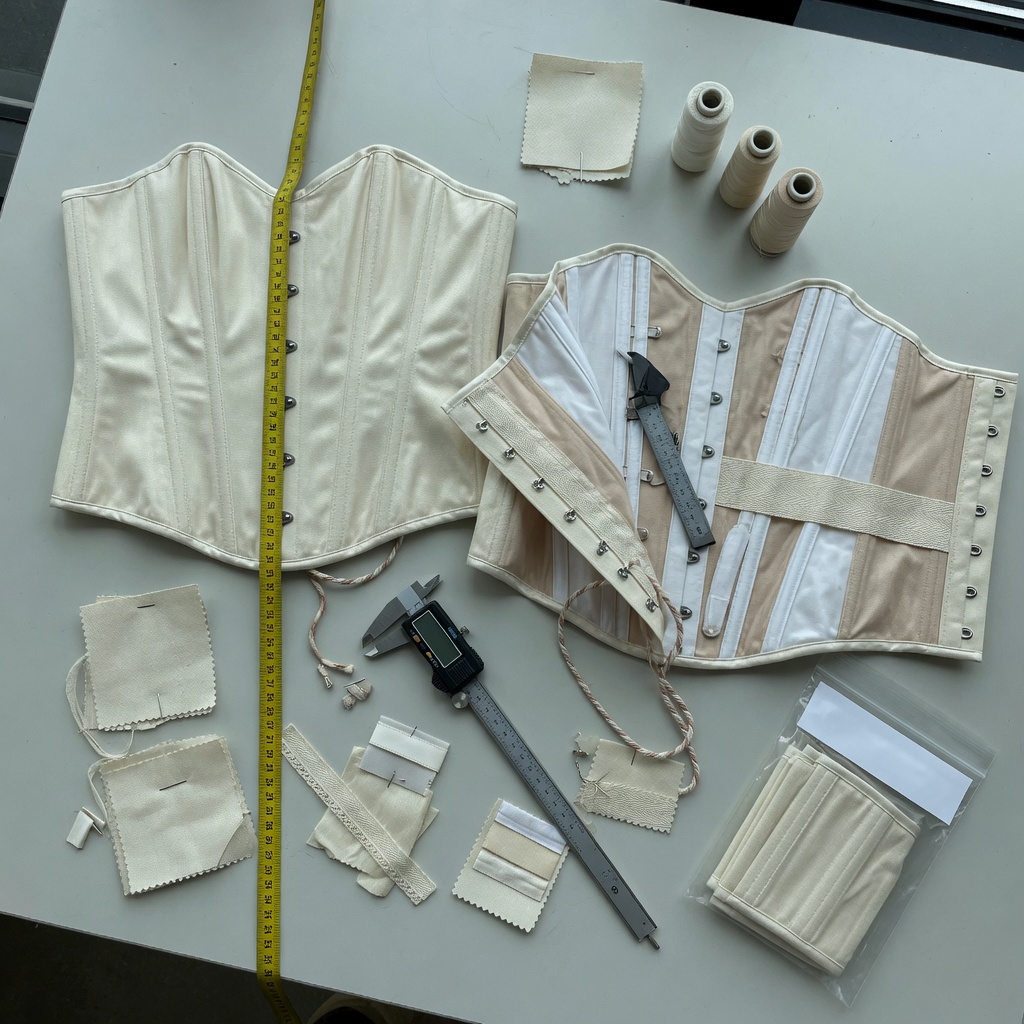
By Vincent Xi, Editorial Author
Author note: The approved profile identifies Vincent Xi as Editorial Author. It does not document first-hand factory, testing, sourcing or client experience, so no such experience claim is made here.
For an Australian buyer, corset OEM sustainability sourcing criteria are useful only when they change an RFQ decision. Each bidder should receive the same corset bustier tech-pack revision, component scope, quantity basis, sample reference, destination and response template. A bid should remain on hold when it omits a mandatory component, manufacturing site, claim boundary, supporting document or technical result.
The quoted corset bustier is the unit of analysis. A factory profile, general environmental statement or material webpage does not establish the status of the product being purchased. Each proposed claim should connect to the applicable component, production site, document and order record.
This article focuses on sustainability evidence for an Australia-bound corset bustier manufacturing RFQ. The supplied sources do not establish Australian legal, labelling, climate, packing or freight requirements. Buyers should obtain a current Australia-specific compliance schedule from qualified sources and assess it separately from supplier sustainability claims.
Apply sustainability sourcing criteria in an Australia RFQ
The following gates are recommended buyer controls. They are not presented as requirements of Australian law, a certification programme or an audit scheme.
| Decision gate | Mandatory supplier return | Release condition | Hold condition |
|---|---|---|---|
| Product lock | Signed tech-pack and sample references, construction scope, sizes, colours, quantity assumptions and deviations | The bid covers the same corset bustier definition issued by the buyer | A construction, component or order assumption is missing or differs from the RFQ |
| BOM and claim map | Line-level bill of materials plus each proposed claim linked to its applicable component | Every claim has a precise product scope and evidence reference | A finished-product claim is inferred from general wording or evidence for one component |
| Manufacturing map | Cutting, sewing, finishing, packing and disclosed subcontracting locations | Every process proposed for the order has an identified site and disclosure status | A relevant site or subcontracted process remains unidentified |
| Evidence scope | Document title, issuer, holder, covered material or site, issue status, validity information and verification route | The record covers the quoted component, claim and manufacturing location | The record is unavailable, expired, out of scope or associated with another product or site |
| Carbon comparability | Functional unit, lifecycle boundary, data period, geography, inputs, exclusions, allocation method and calculation owner | Competing returns use an aligned basis or include enough detail for reconciliation | A total lacks its unit, boundary, data vintage or material assumptions |
| Sample and QC release | Buyer-defined measurements, methods, tolerances, sample identity and results | The proposed material and construction meet every mandatory technical criterion | A sustainability preference is offered in place of product-performance evidence |
| Traceability and change control | Links among order, material lot, production batch and shipment, plus a written substitution process | Bulk production can be matched to the approved product and evidence scope | A source, site, component, process or claim can change without buyer approval |
| Australia schedule | Completed response to the buyer's current compliance, packing and delivery schedule | Every buyer requirement has a response, evidence reference or declared exception | A blank response is treated as acceptance or a local requirement is assumed without a source |
Require each response field to be marked as provided, not applicable with a reason, or outstanding with an owner and due date. A blank field should remain an unresolved exception.
Practical RFQ checklist for Australia corset bustier bids
Use this checklist as a hold-and-release record for each supplier. An unchecked mandatory item remains open and should not be treated as accepted by silence.
Before issuing the RFQ
- [ ] Attach the locked corset bustier tech-pack revision and approved sample reference.
- [ ] State the SKU scope, sizes, colours, quantity basis, intended use and required dates.
- [ ] Name the Australian delivery destination and state the requested quotation basis.
- [ ] Attach the buyer's current Australia compliance, labelling, packing and delivery schedule with authoritative references.
- [ ] Issue a component-level BOM template covering fabrics, reinforcement, boning, closures, eyelets, binding, lacing, thread, labels and packaging.
- [ ] Define mandatory sustainability claims, prohibited wording and the evidence needed for approval.
- [ ] State sample measurements, methods, tolerances, technical acceptance limits and approval authority.
- [ ] Require disclosure of manufacturing sites, subcontracted processes and proposed alternatives.
For each supplier response
- [ ] Obtain a signed specification response and a separate deviations register.
- [ ] Match every proposed claim to a component, facility, document holder and evidence reference.
- [ ] Record document scope, issue status, validity information and verification route.
- [ ] Capture the carbon functional unit, boundary, data period, sites, inputs, exclusions and calculation owner.
- [ ] Link proposed material lots, production batches and shipment records to the order traceability method.
- [ ] Identify every blank, assumption, exception and outstanding item with an owner and due date.
- [ ] Separate manufacturing evidence from route-dependent Australia delivery assumptions.
Before award and production release
- [ ] Reconcile bidder returns to the same product, BOM, quantity and carbon boundary.
- [ ] Verify current scope-matched documents with the applicable issuer or scheme authority.
- [ ] Approve the physical sample and QC results against the locked product definition.
- [ ] Resolve Australia-specific compliance, packing and delivery exceptions through qualified sources.
- [ ] Attach the approved BOM, site list, claim register, evidence register, sample reference and QC plan to the purchase agreement.
- [ ] Require written reapproval for changes to materials, sites, subcontractors, processes, packaging, calculations or claims.
Evidence baseline for corset bustier bids
The supplied sources serve different purposes and should not be treated as interchangeable evidence.
| Source context | What the source can support | What it cannot establish |
|---|---|---|
| Carbonfact corset page | Category-model values that can inform questions about carbon units, boundaries and inputs (source) | The footprint of a quoted corset bustier, an Australian market average or a purchasing threshold |
| Duolan sustainability page | Supplier-published terminology concerning factory information, SMETA audit records, material requirements, QC structure and support for GOTS and OEKO-TEX documentation (source) | Current status or scope for a quoted site, material, product or order |
| Xiuyu corset-dress page | Supplier-published references to GRS recycled polyester, BCI cotton, BSCI, GOTS, OEKO-TEX, GRS and BCI (source) | Certification, availability or coverage for a particular material lot, facility or corset bustier order |
| Vincent Xi author profile | The author's name and Editorial Author role (source) | Personal factory, sourcing, product-testing or client experience |
Carbon data used as screening context
| Reported value | Scope | Date or as-of context | Source and permitted use |
|---|---|---|---|
| 7.66 kg CO2e per corset | Carbonfact's modeled average for the corset category; the complete lifecycle boundary, geography and model sample are not shown in the supplied excerpt | Publication date and model as-of date are not stated in the supplied excerpt | Carbonfact (source); use only to frame supplier questions |
| 3.13 kg CO2e per corset | Carbonfact's lower modeled result for the corset category; the complete lifecycle boundary, geography and model sample are not shown in the supplied excerpt | Publication date and model as-of date are not stated in the supplied excerpt | Carbonfact (source); do not adopt as a supplier target or verified minimum |
| 14.66 kg CO2e per corset | Carbonfact's upper modeled result for the corset category; the complete lifecycle boundary, geography and model sample are not shown in the supplied excerpt | Publication date and model as-of date are not stated in the supplied excerpt | Carbonfact (source); do not treat as a market limit or expected product result |
None of these sources proves that a particular component, factory, corset bustier or order is sustainable. That decision requires current evidence matched to the bidder's proposed product and the buyer's approval criteria.
Build a component-level BOM and claim register
Request evidence for every applicable component rather than accepting a shell-fabric summary. The supplier should mark unused component fields as not applicable.
| Component group | Measurable supplier return | Claim control |
|---|---|---|
| Shell, lining and interlining | Fibre composition by mass, fabric areal density, usable width, mass per finished sample, producer or converter reference, processing location and proposed lot-link method | Record the exact claim, evidence holder, covered material, scope and validity information for each fabric |
| Boning and reinforcement | Material type and grade, width, thickness, cut length, count, placement map, channel construction, tip treatment and supplier part reference | Do not extend a fabric claim to reinforcement or boning without matching evidence |
| Closure and eyelet components | Base material, finish or coating, dimensions, count, placement, supplier part reference and proposed batch identifier | Link any material or process claim to the specific hardware item and evidence scope |
| Binding, lacing, thread and labels | Material composition, dimensions or linear density, stitch or attachment specification, supplier reference and sample mass where requested | State whether the evidence covers the component, its processing site or neither |
| Unit and shipment packaging | Material composition, dimensions, mass, supplier reference, packing configuration and proposed claim | Keep packaging claims separate from garment claims and route-dependent freight assumptions |
The claim register should capture the proposed wording, applicable component or facility, evidence ID, document holder, issue and validity information, verification route, known limitation and approval status. It should also identify wording prohibited from public use.
Shell-fabric evidence alone should not release a finished-product claim. Where a claim depends on mass-balance, chain-of-custody, transaction or lot records, require the supplier to identify the record type and explain how bulk material will connect to the purchase order. Current programme rules should be confirmed with the relevant scheme owner or issuer.
Compare manufacturing carbon evidence on one basis
Use the Carbonfact values only to test whether bidders can explain their calculation basis. A supplier total is not comparable until the functional unit and lifecycle boundary are aligned.
Require each bidder to return:
- The functional unit, such as kg CO2e per finished corset bustier, with packaging inclusion stated.
- Included and excluded lifecycle stages, manufacturing processes and transport legs.
- Data-period start and end dates, calculation date, geography and named production sites.
- Material composition, component masses, cutting-loss assumptions, energy, waste, yield and transport inputs.
- Identification of site-specific primary data, supplier-specific secondary data, database factors and industry averages.
- The source, version and applicable geography of emission factors where available.
- Allocation methods for shared processes and the treatment of scrap, production loss and rework.
- Separate manufacturing and delivery results when transport to the named Australian destination is included.
- Calculation ownership, review status, uncertainty, unresolved gaps and revision procedure.
If bidder boundaries differ, request a component or stage breakdown that permits reconciliation. Do not score a combined manufacturing and Australia-delivery total unless the route, loading basis, allocation and exclusions are disclosed.
A modeled return can remain open for clarification during early sourcing when its assumptions are visible. The buyer may still require site- and order-specific evidence before material booking, claim approval or purchase release. Recalculation should be triggered by a change to the BOM, source, site, packaging, order basis or delivery route.
Verify scheme, audit and testing references
Duolan's page refers to SMETA audit records and support for GOTS and OEKO-TEX documentation (source). Xiuyu's page uses BSCI, GOTS, OEKO-TEX, GRS and BCI terminology (source). These are supplier-published statements, not independent verification of a quoted order.
| Supplier reference | Scope-matched evidence request | RFQ decision rule |
|---|---|---|
| Material or product certification | Programme and document title, issuer, holder, covered material or product, applicable site, issue status, validity information and verification route | Approve only the material, product, facility and period covered by a current document |
| Chemical or product test | Test report, laboratory identity, tested component, sample identifier, method, result, issue information and covered colour or material variant | Do not extend a result to an untested component, batch, colour or construction |
| SMETA- or BSCI-related statement | Named facility, audit type, audit date, scope, findings status, corrective-action status and buyer access to the relevant record | Treat the scheme name alone as unverified and do not assume one site record covers subcontractors |
| Order traceability statement | Applicable transaction, lot, production or chain-of-custody record and the identifiers connecting it to the order | Hold the affected claim when the quoted material cannot be linked to bulk production |
These fields are buyer controls, not summaries of the formal requirements of GOTS, OEKO-TEX, GRS, BCI, BSCI or SMETA. They also do not assert that a cited supplier currently holds a valid document. Confirm current terminology and rules with the applicable scheme owner, issuer or audit platform, and do not describe a material, facility or corset bustier as certified without a current document covering that exact scope.
Tie sustainability evidence to sample and QC release
A preferred material or claim does not replace technical approval. Use the same locked product definition for the sustainability review, sample approval and bulk inspection.
| QC area | Buyer-defined field | Supplier evidence |
|---|---|---|
| Dimensions | Centre-front and centre-back length, waist at a defined line, top and bottom edge measurements, closure length and panel positions, with declared units and tolerances | Measurement report linked to the tech-pack revision, sample size, conditioning method and sample identity |
| Structural components | Boning material, count, width, thickness, length, position, channel width, end containment and reinforcement placement | Component specification, placement record and inspection result tied to the approved sample |
| Seams and stitching | Seam type, stitch type, stitch density, seam allowance, specified strength unit and buyer-set acceptance limit | Method, equipment, result, failure mode and corrective action where applicable |
| Closures and eyelets | Alignment, spacing, operation, setting condition and buyer-defined retention or pull-out requirement where applicable | Test method, sample identity, result and inspection record |
| Material response | Stretch and recovery method, dimensional-change result and colour-performance method selected by the buyer | Report linked to the tested fabric lot, colour and sample construction |
| Visual workmanship | Panel symmetry, edge finish, binding condition, lacing path, surface damage and defined defect categories | Inspection stage, sample-selection method, defect record, approval authority and corrective-action status |
The RFQ or attached test schedule should define methods, sample quantities and acceptance thresholds. No universal performance threshold is established by the supplied sources. When a bidder proposes a material or trim carrying a sustainability claim, require a comparison sample made to the approved pattern and construction, disclose each changed variable and connect the report to the tested batch.
Bulk approval should identify the sample, material references and component versions that production must match. A sustainability preference should not offset a failed fit, support, durability, safety or workmanship requirement set by the buyer.
Australia-bound corset bustier manufacturing RFQ
Use a structured return so every bidder answers the same commercial, product and evidence questions.
| RFQ section | Buyer input | Supplier return and release control |
|---|---|---|
| Product identity | Corset bustier SKU, tech-pack revision, sample reference, intended use, sizes, colours and construction scope | Signed specification, deviations register and separately priced alternatives |
| Order basis | Quantity basis, required dates, quote structure and approval milestones | Minimum order quantity, capacity assumptions, sampling time, production time and quote validity |
| Sustainability criteria | Mandatory and prohibited claims, evidence fields and approval authority | Completed BOM, claim register, document register, site map, carbon return and disclosed gaps |
| Australia compliance | Buyer's current legal, labelling and product-compliance schedule from qualified sources | Response and evidence reference for each requirement, with exceptions identified |
| Packing and delivery | Named Australian destination, approved packing brief and requested delivery basis | Unit and shipment dimensions and mass, packaging composition, origin, route assumptions, quotation date, validity and separately identified freight where requested |
| Sampling and QC | Measurement specification, methods, tolerances, acceptance limits and approval process | Sample plan, reports tied to sample and material IDs, failures, corrective actions and reapproval timing |
| Traceability | Required links among purchase order, material lot, production batch and shipment | Record map, responsible party, available identifiers and proposed retention period |
| Change control | Components, sources, sites, subcontractors, processes, documents and claims requiring approval | Written change request, revised evidence, sample plan, commercial effect and approval status |
Do not infer a local requirement from the destination alone. If the buyer's current Australia-specific schedule requires a label, test, declaration, packaging control or shipping document, the RFQ should state the exact requirement and cite its authoritative source. The supplier should respond to that buyer-provided schedule rather than treating this article as legal evidence.
For the award decision, classify each mandatory gate as pass, clarification required or fail. Record the evidence reviewed, its scope and the decision beside each bid. Keep preferred attributes and price comparisons outside the mandatory release assessment so they cannot conceal an evidence gap or technical failure.
Before award, resolve the approved product definition, component and site claims, document scopes, carbon boundary, manufacturing locations, sample identity, QC records, Australia-specific controls, delivery assumptions and commercial deviations. Attach the approved BOM, site list, claim register, evidence register, sample reference, QC plan and change-control procedure to the purchase agreement.
Require written reapproval before changing an approved material, trim, source, manufacturing site, subcontractor, process, packaging item, calculation boundary or sustainability claim. If supporting evidence expires, changes scope or cannot be connected to the order, place the affected claim on hold and document any separate decision concerning physical production.
Methodology and limitations
Methodology. The Carbonfact values were transcribed from the supplied corset-page excerpt without recalculation and used only as category-model context for supplier questions. The Duolan and Xiuyu pages were reviewed as supplier-published examples of material, audit and certification terminology; their statements were converted into evidence requests rather than treated as independent proof. The author identity and role were taken only from the supplied Vincent Xi profile. The RFQ controls were derived by mapping each purchasing decision to the product, component, site, document, measurement and order record needed to review it.
Limitations and items to verify. The supplied excerpts do not include publication dates, the complete Carbonfact methodology or model sample, current scheme rules, certificates, audit records, transaction documents, laboratory reports or Australian legal sources. They do not verify a particular factory, material lot, corset bustier or shipment. Before purchase approval, recheck each cited page, obtain current scope-matched documents, verify records with the relevant issuer or scheme authority, connect material and production identifiers to the order, review test results against the buyer's specification and confirm current Australian compliance, labelling, packing and freight requirements through qualified sources.
Discuss Your Requirements
Review our manufacturing capabilities, then share your specifications for a supplier-fit review.